SUNRISE LAMP
SUNRISE LAMP
Self Portrait as Product Design
Finn Davies · [S3004809] · Introduction to Product and User Experience Design (1362QCA) · Trimester 2, 2026
PRODUCT + UX PORTFOLIO
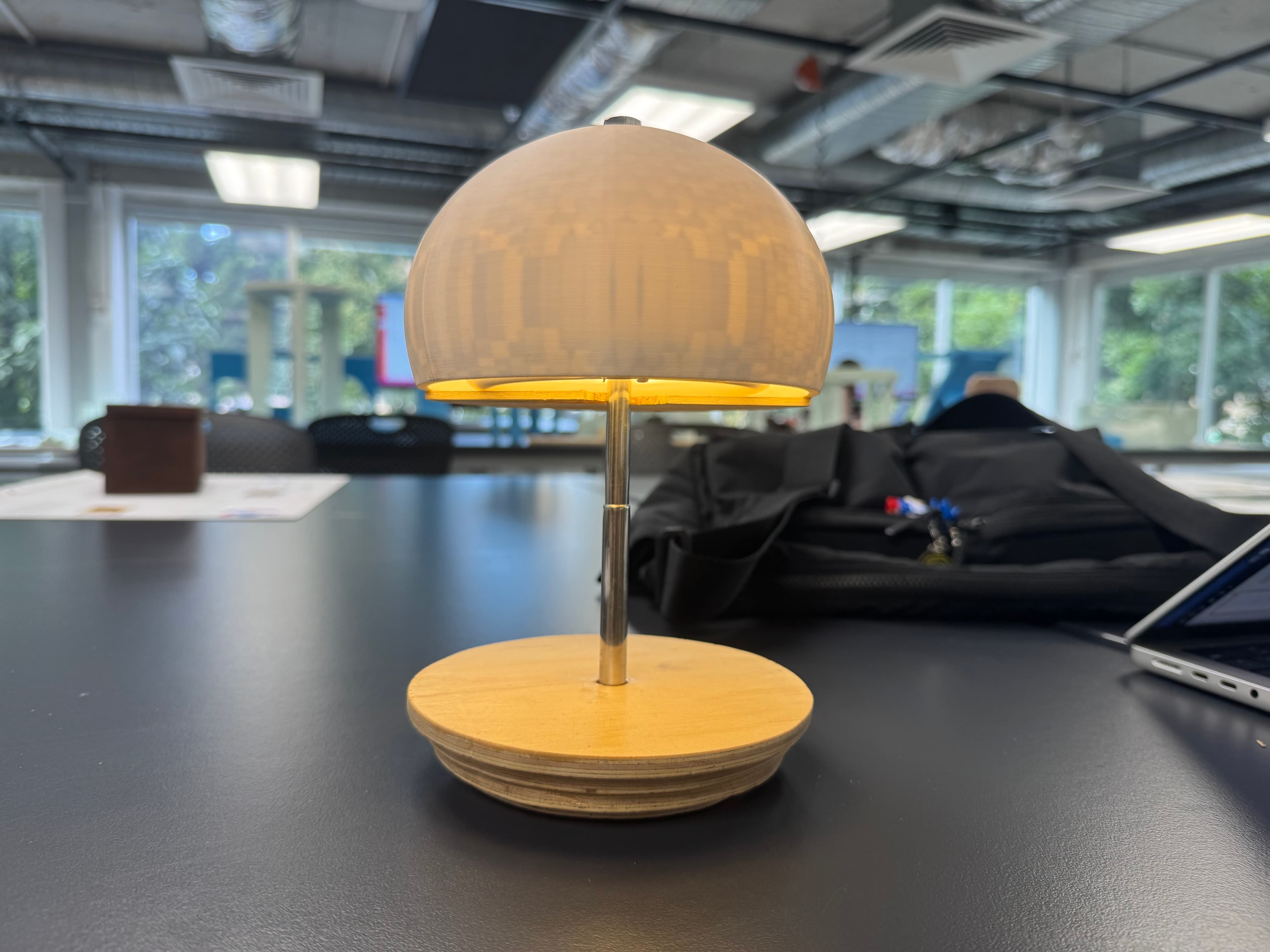
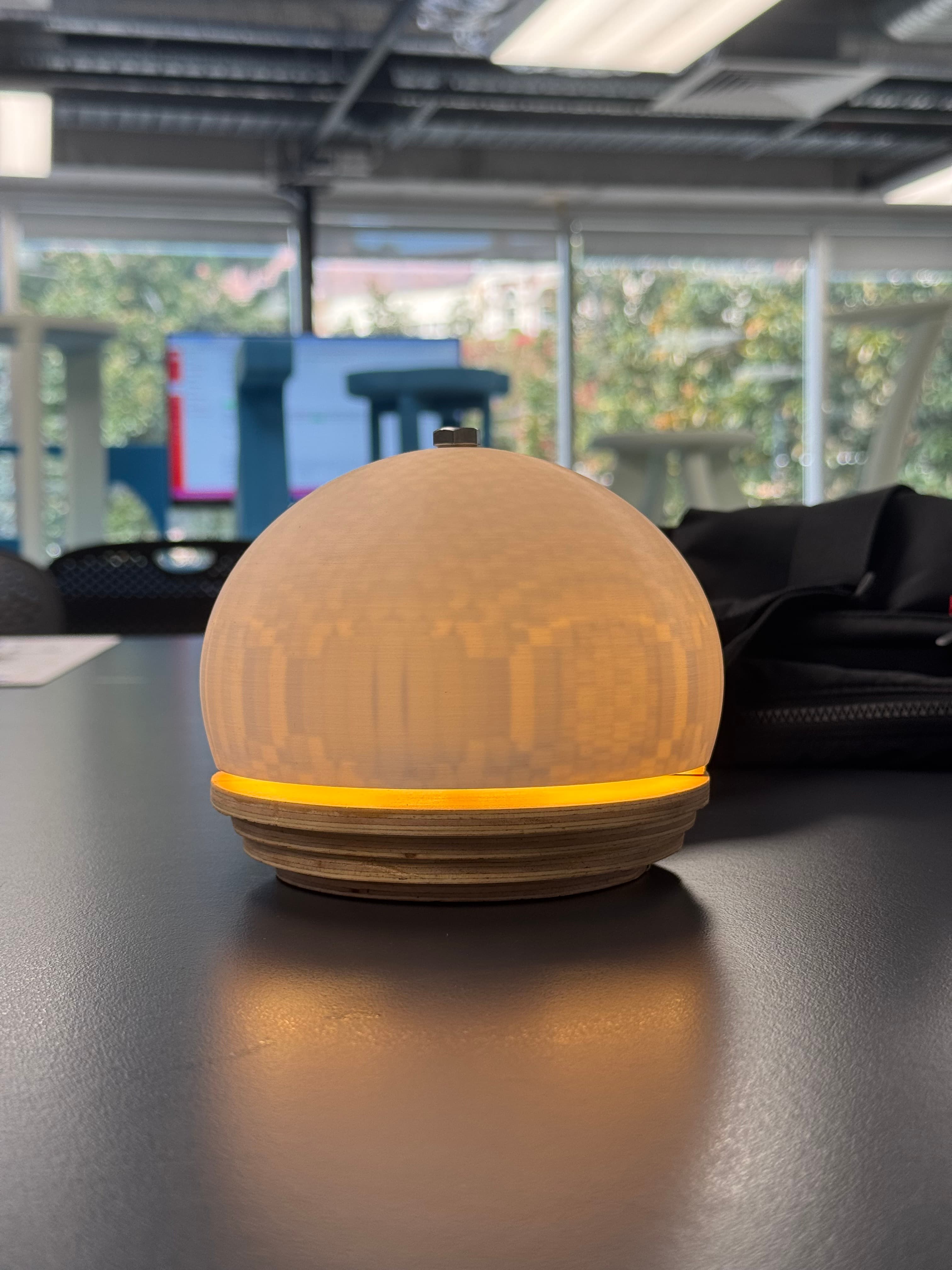
1. Concept: Self Portrait as Object
This lamp design was inspired by own personal journey of honest self reflection and daunting directional shifts. The design of this lamp portrays my story through its features and functions. The lamp has two forms, the first taking a solid, rounded hemispherical shape. The second is lamp opened, achieved by the collapsable metal arm. The translucent lamp shade allows the eminence of blurred warm light from the bulb. (*how is the bulb changed?). The lamp is given weight and nice texture contrast but is wooden base.
2. Ideation Sketches
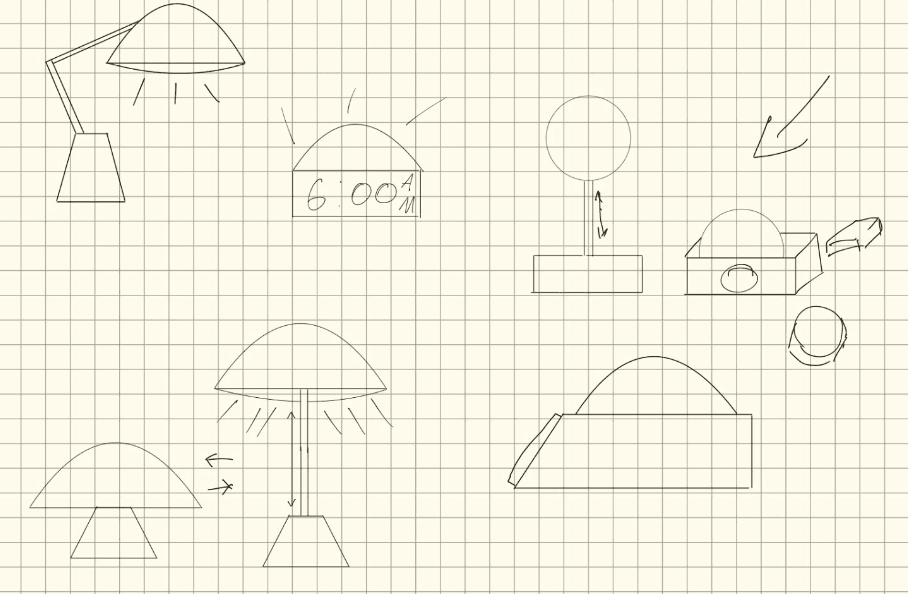 *Caption: Exploring different ideas and use cases for the lamp
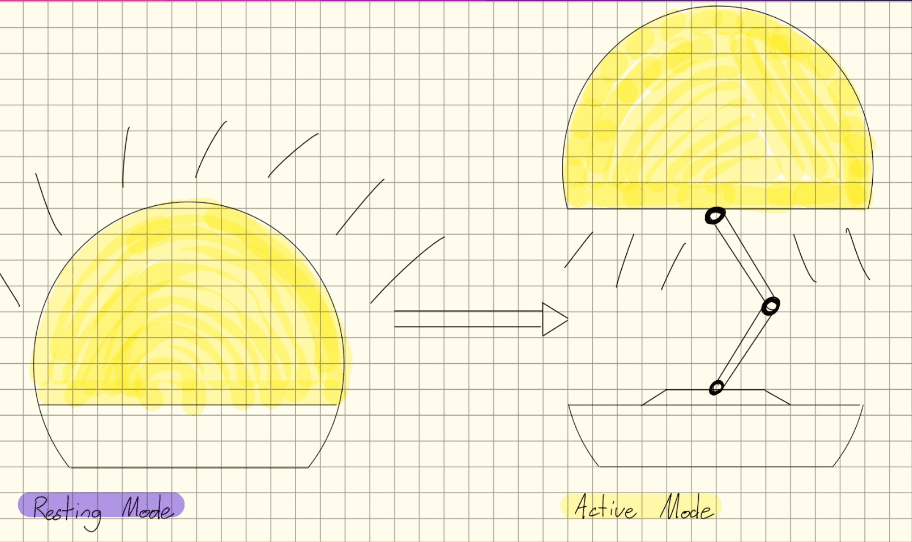 Caption: Decidied on final design, kept idea simple to make product mission clear
3. Technical Drawings
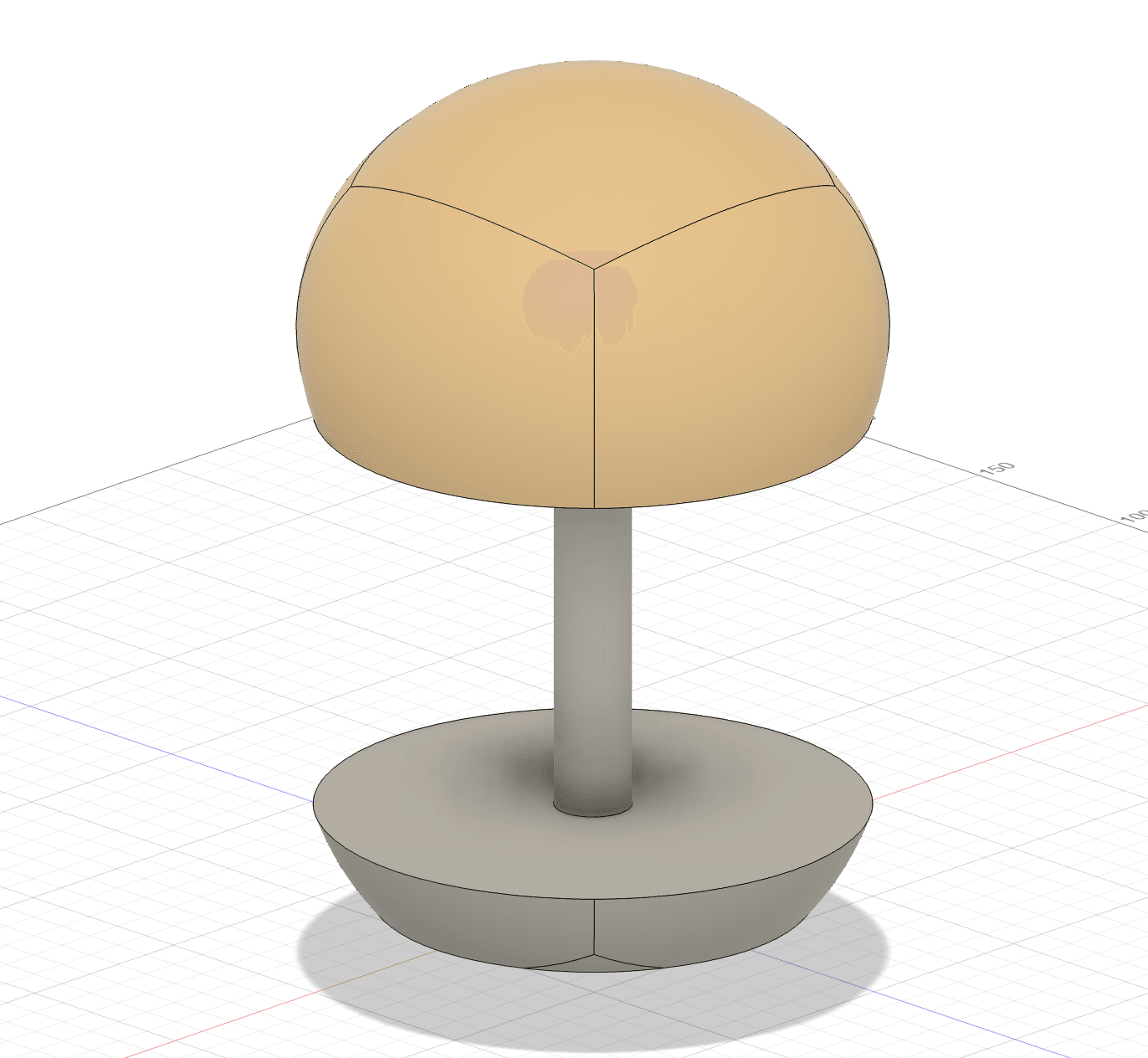
Isometric View
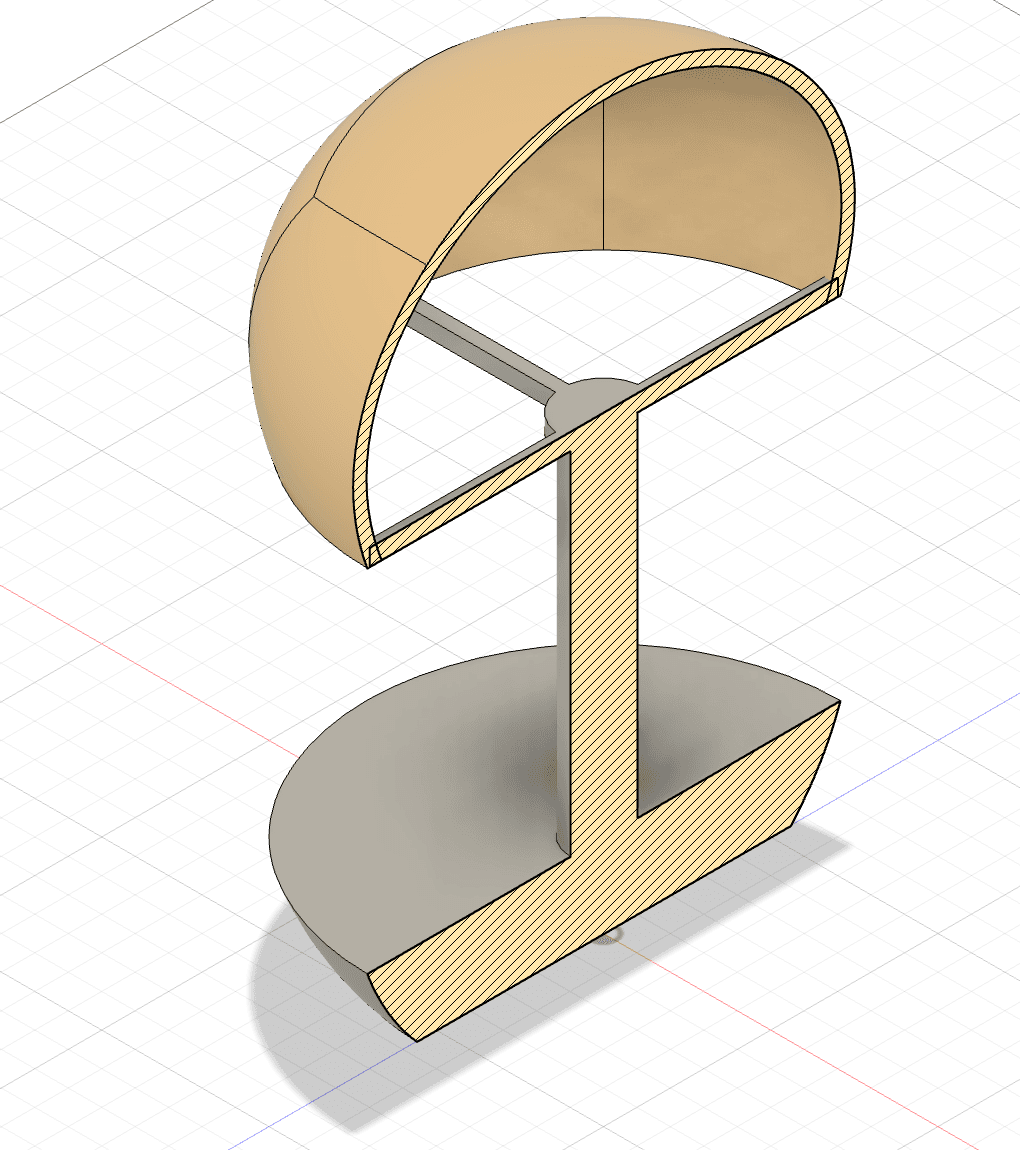
Exploded / Detail View (optional)
4. Sequence Drawings
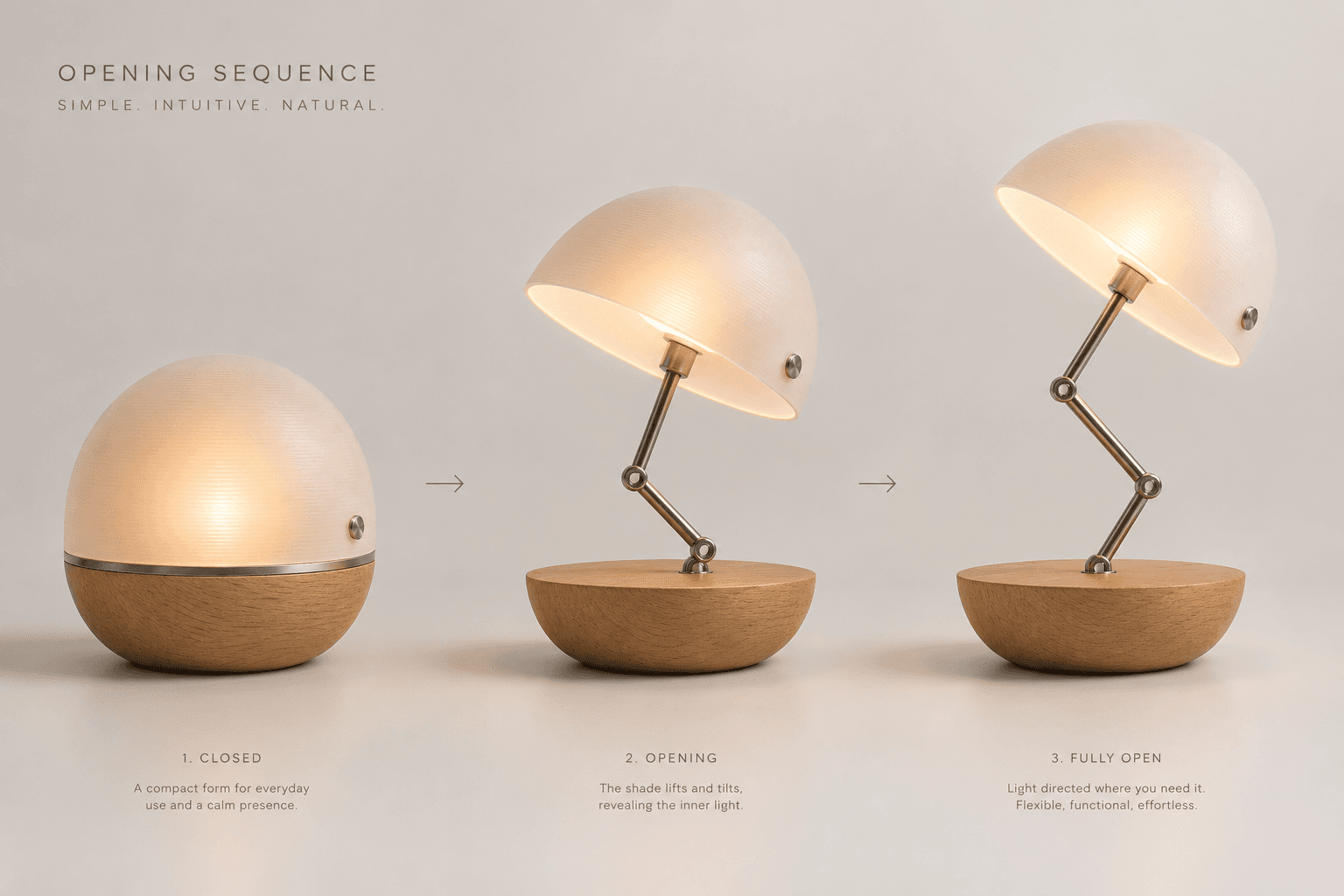
The Lamp transitions from closed to fully open with a simple pull from the top. The weighted base hold the lamp down and makes it easy to use the lamp with only one hand.
5. Physical Prototype
Stage 1: The Base
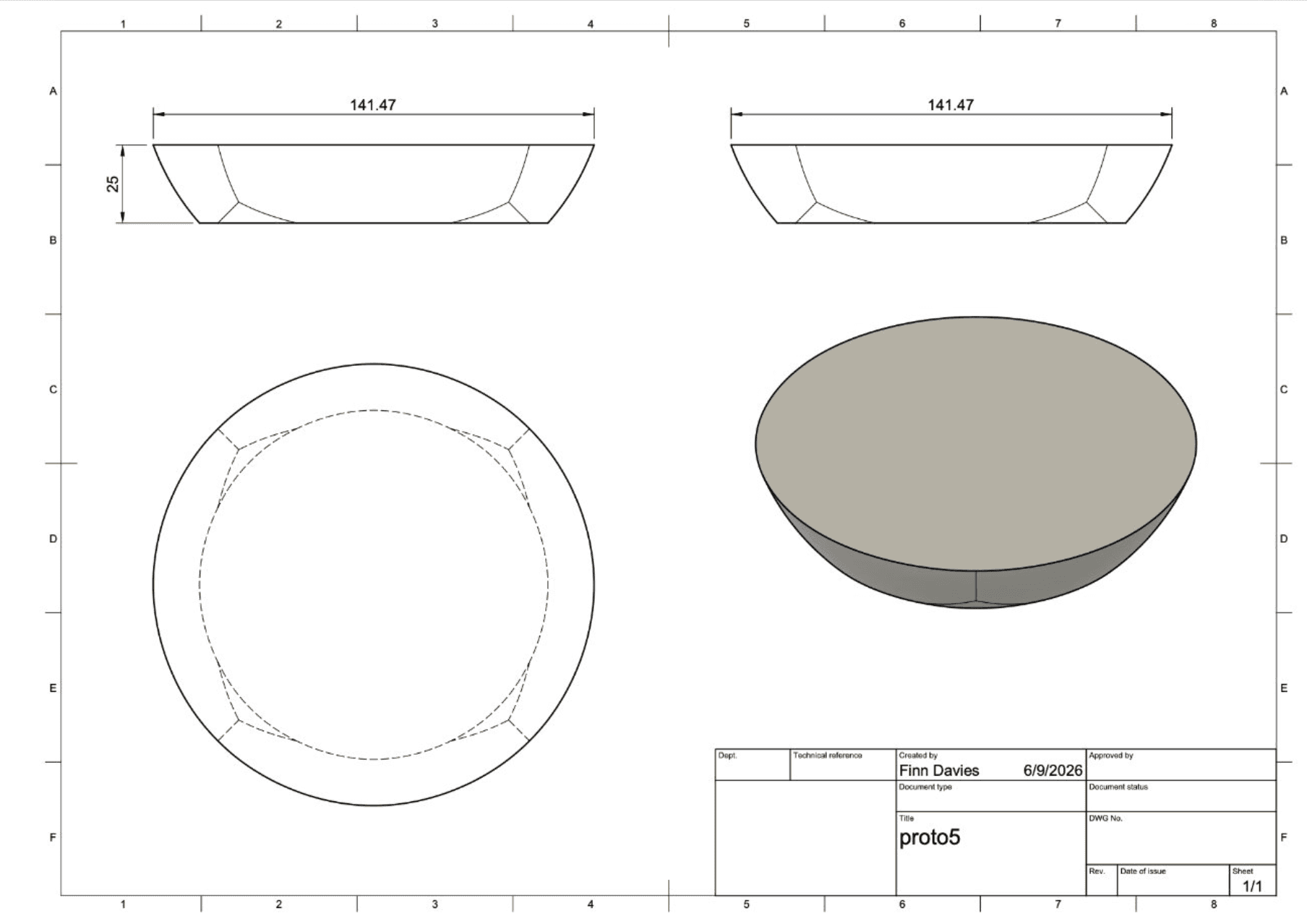
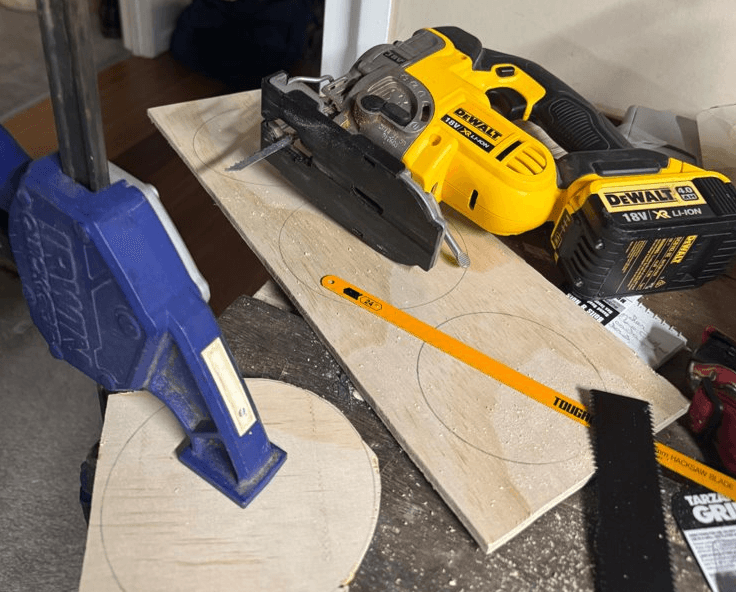
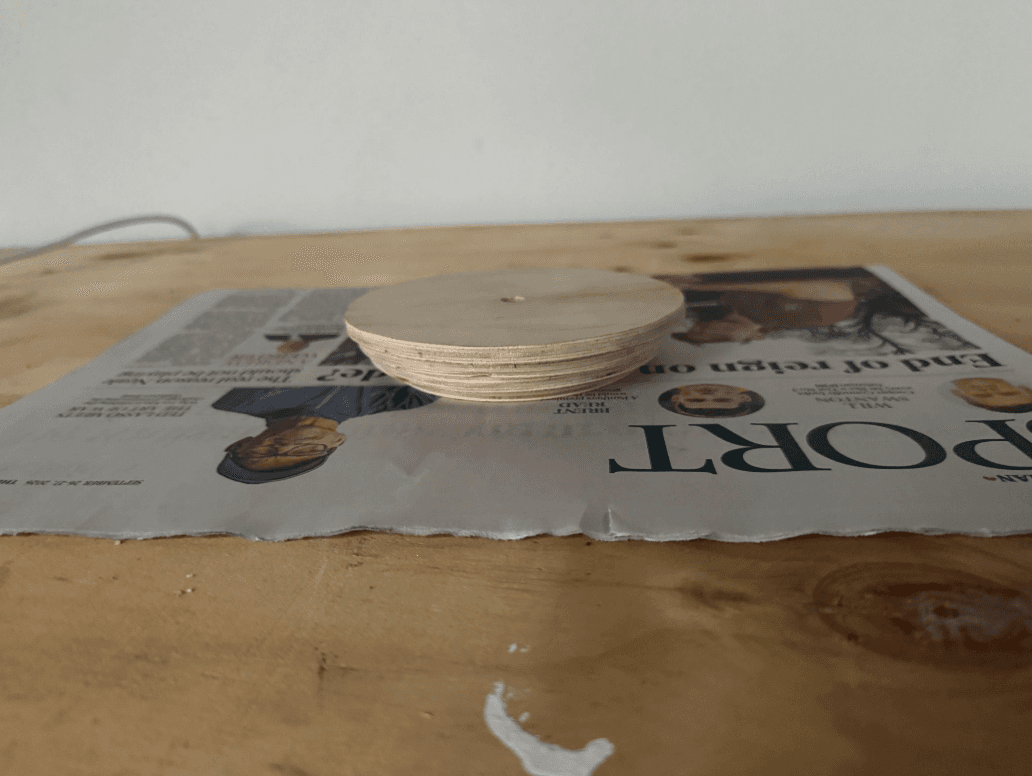 Base built out of wood, circles were drawn on and then cut out each one smaller than the other. Than all the piece were glued together and a hole was drilled into the middle.
Stage 2: Pole Mechanism
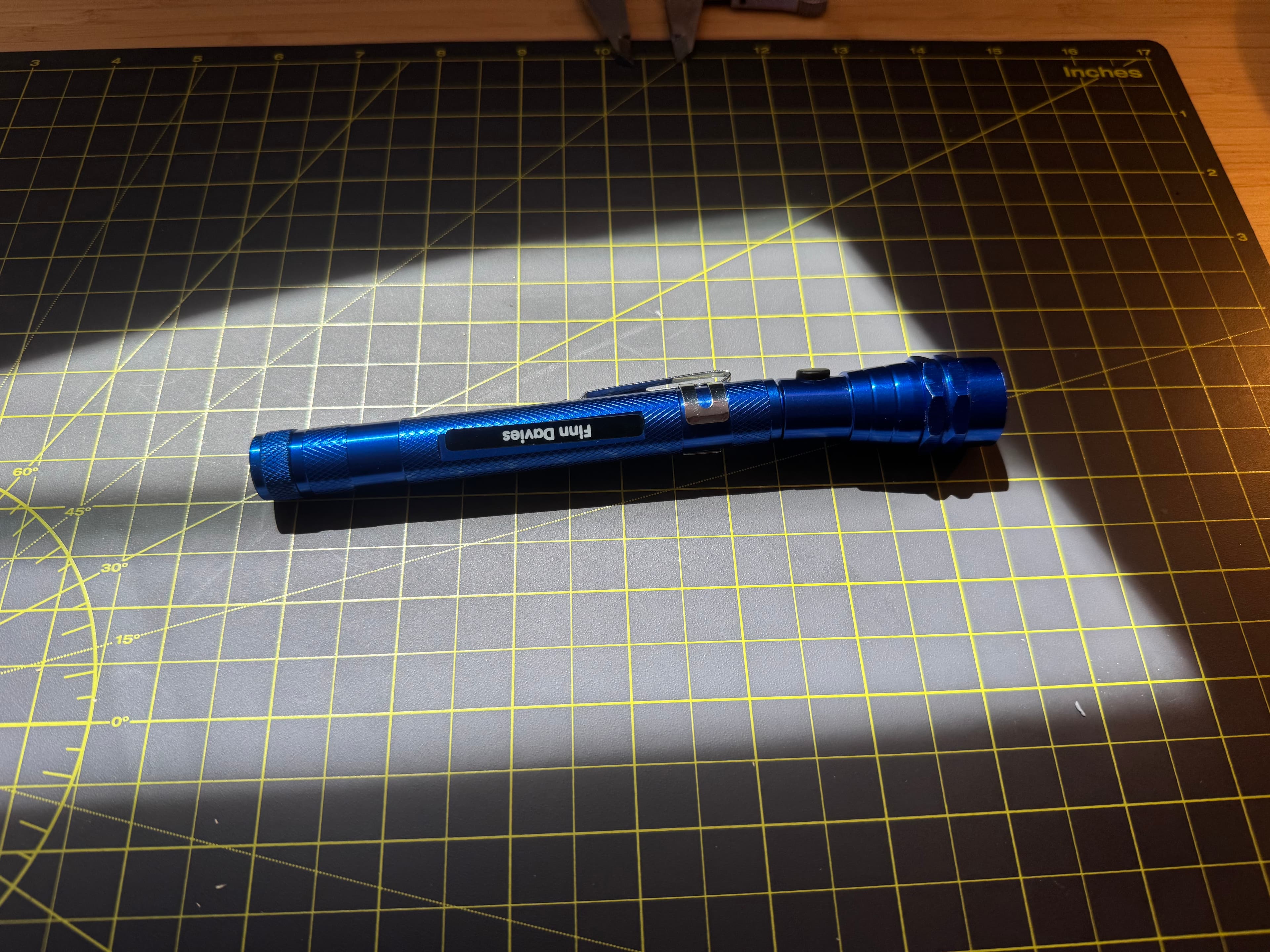
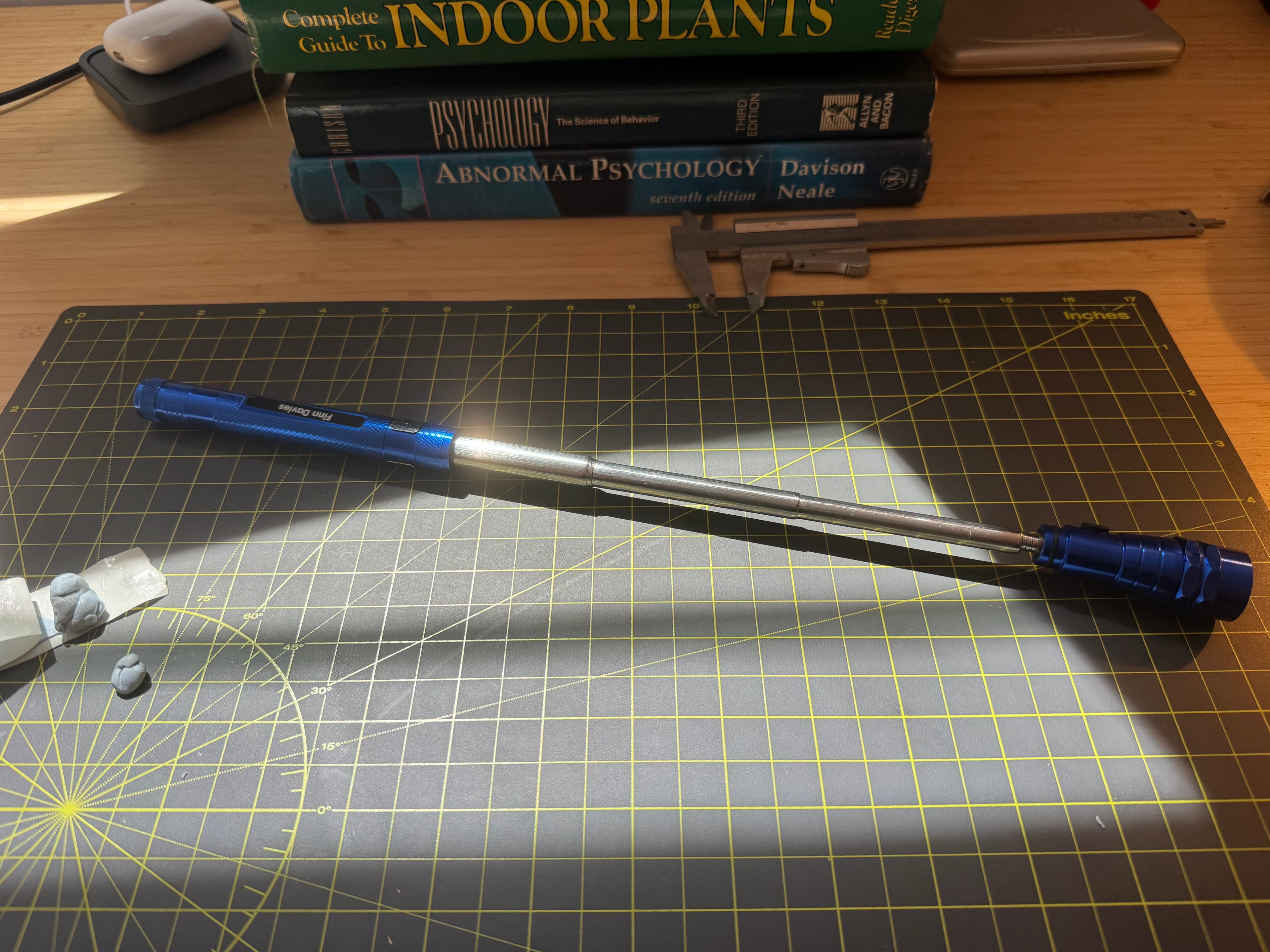
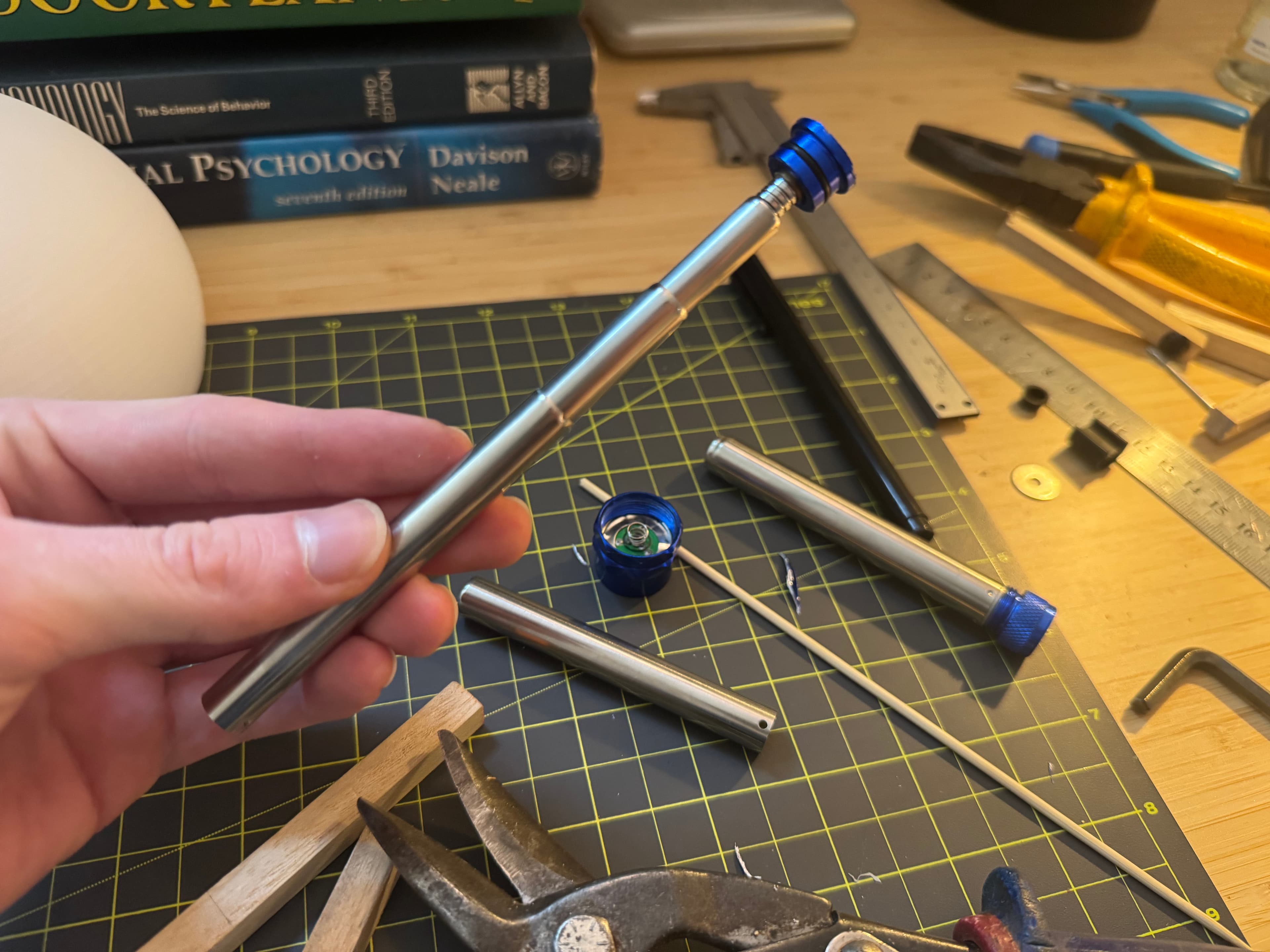
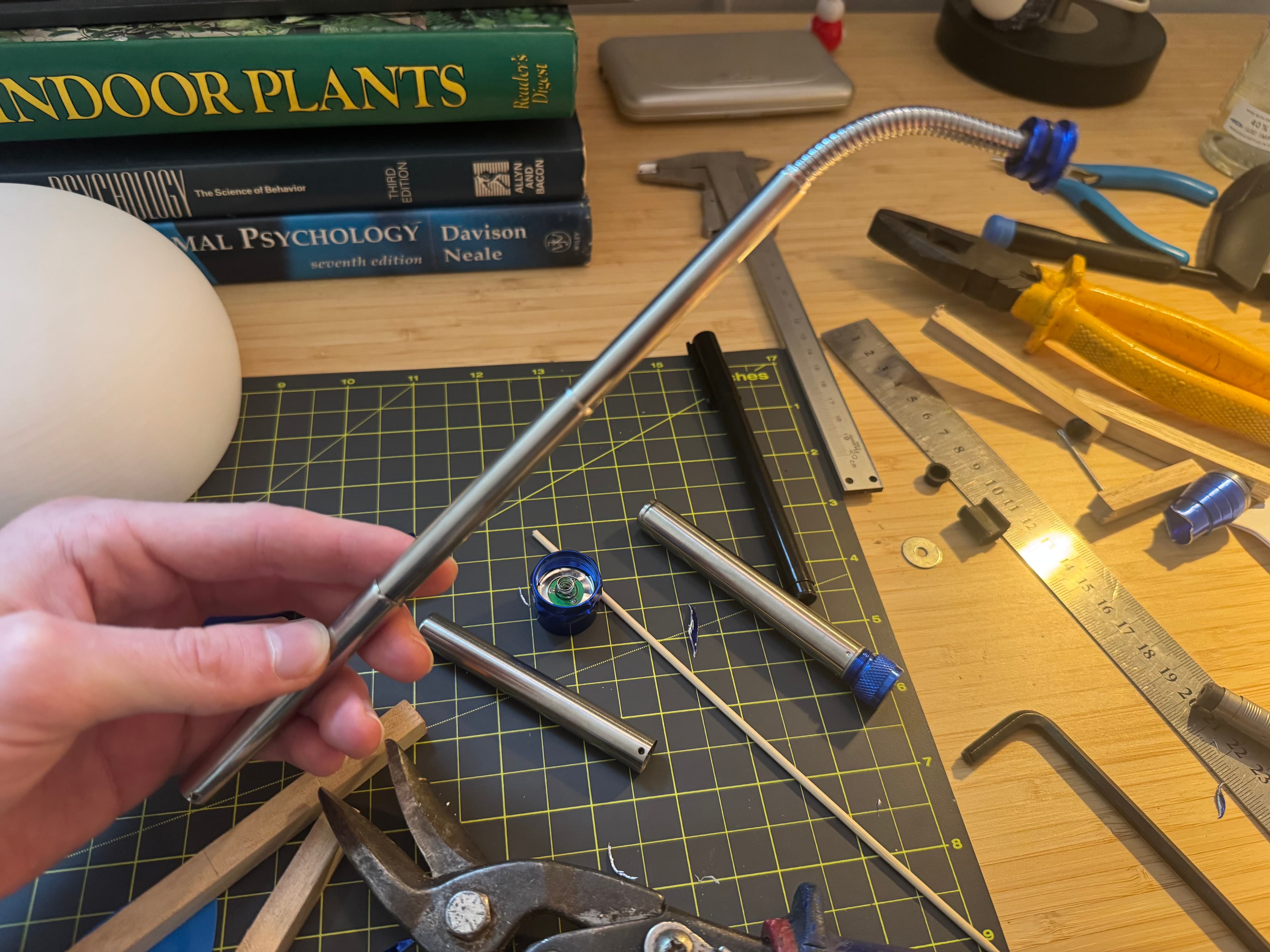 Pull apart a light that had the mechism I wanted for my design and repurposed it.
Stage 3: Lighting
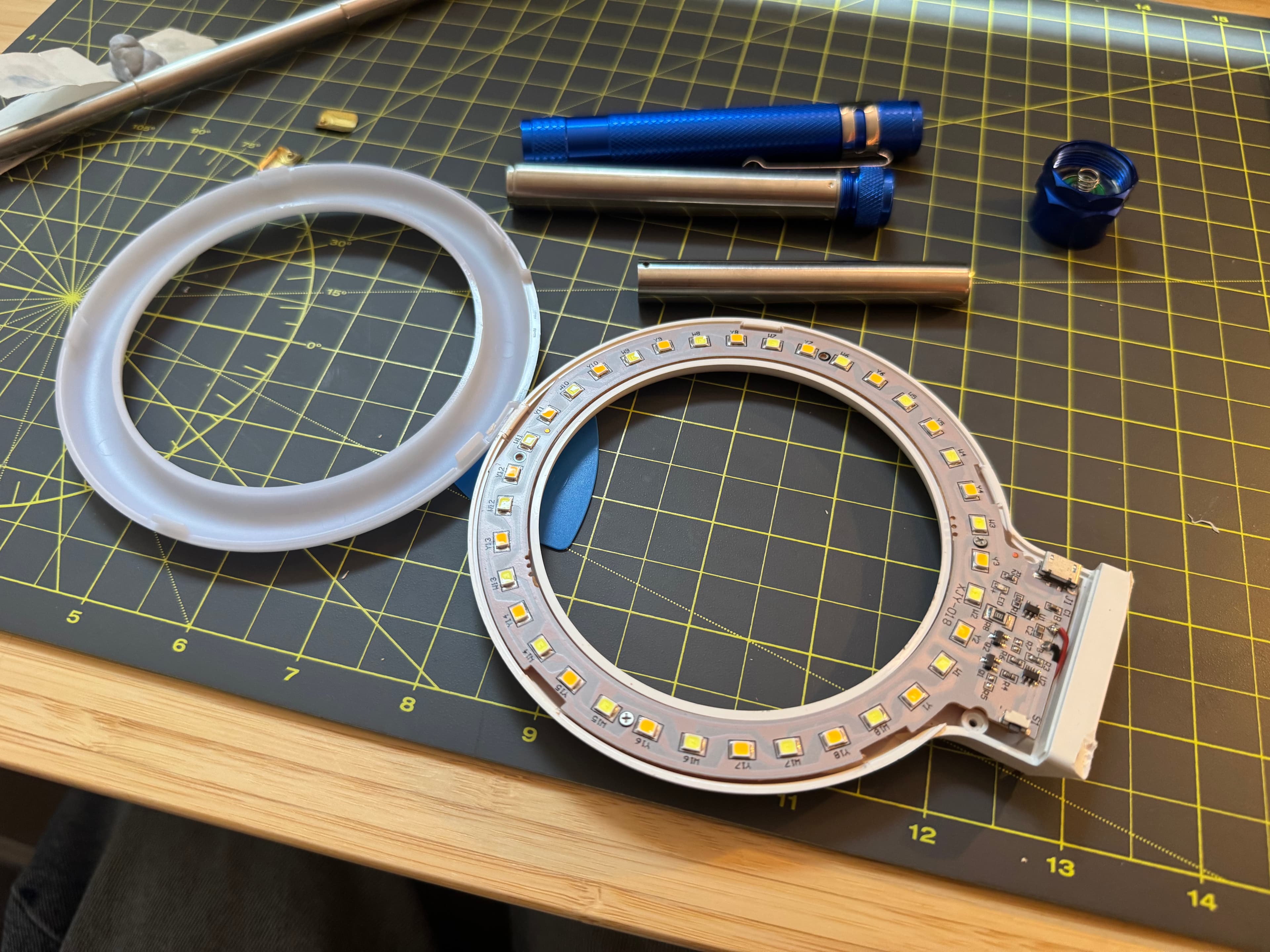 Caption: Pull apart an old selfie light and use to it light the project
Stage 4: Assembly
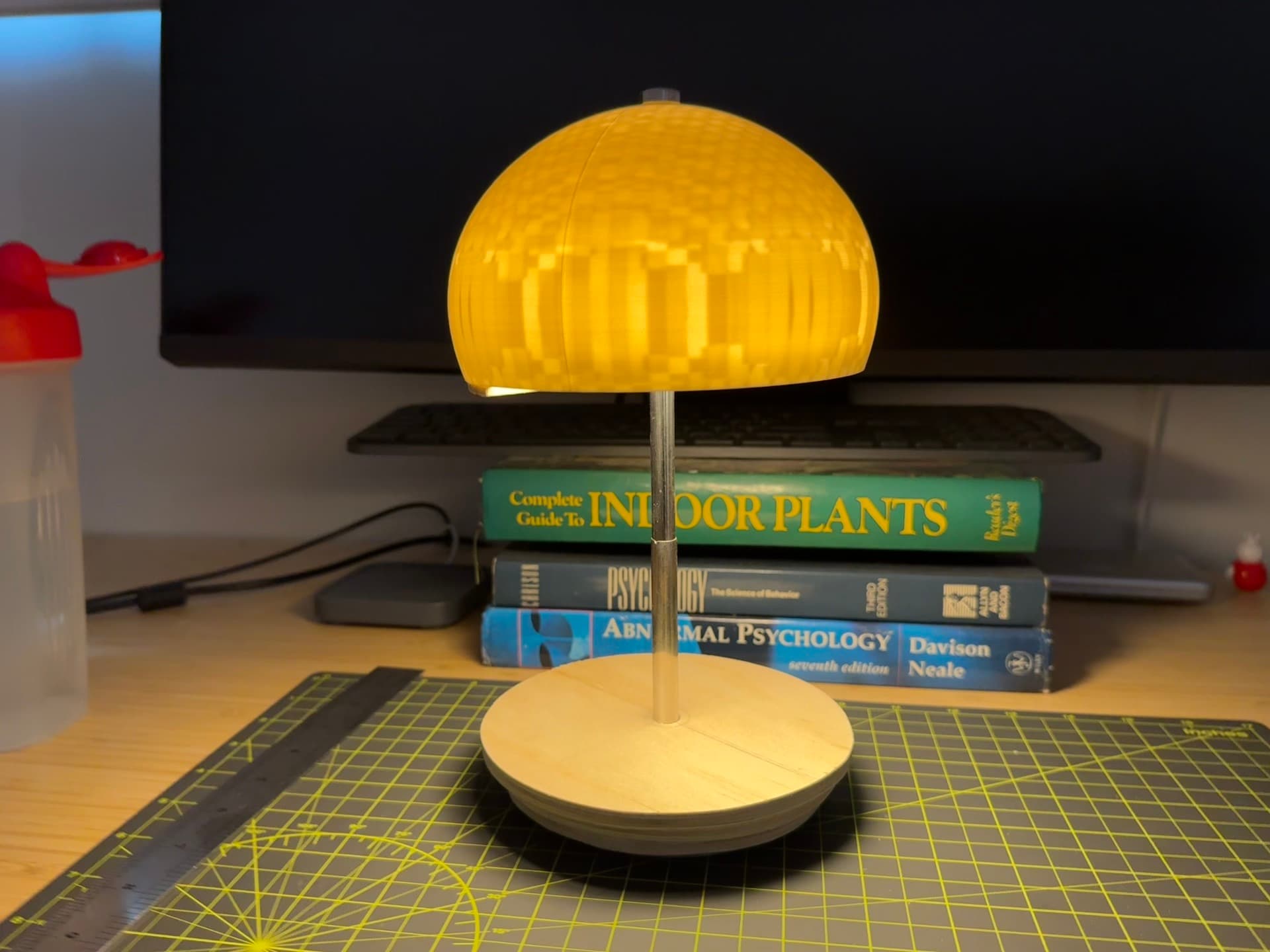 Caption: Glued all the components together, creating the finshed prototype
6. Final Outcome
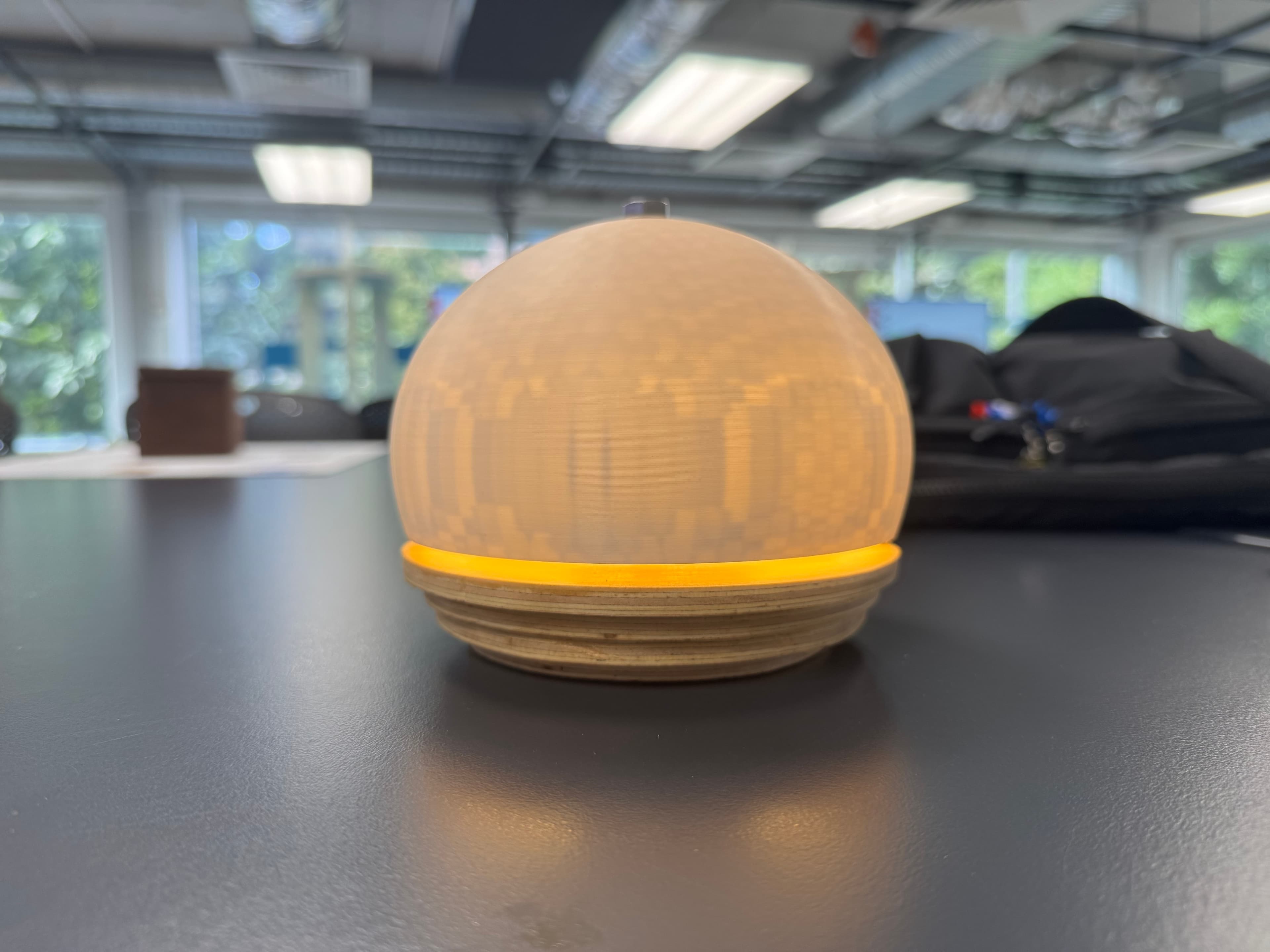
7. Reflection
Over week 7 – 11 I went through the process of personality reflection to a complete physical prototype. From mapping my own personality traits such as self-reassessment, follow through despite waning motivation and solo decision making into a full design brief has taught me personal design mechanisms and form that reflect and mirror my own behavior. Starting with a sketch to experiment which shapes could carry meaning while AI helped me to render different CMF options to trial what colors and materials would suit. Modeling my sketches within fusion 360 taught me the practical side of prototyping, especially when trying to create one unified shape. Hands-on building was the biggest learning curve. I found it was easier to repurpose some of the materials around me rather than to reinvent it from base.
The complete prototype was a satisfying journey. From sketch to model to a functional physical product, I haven't been prouder of a project before. There is a pride in building something yourself from scratch and its something I look forward to doing again.
